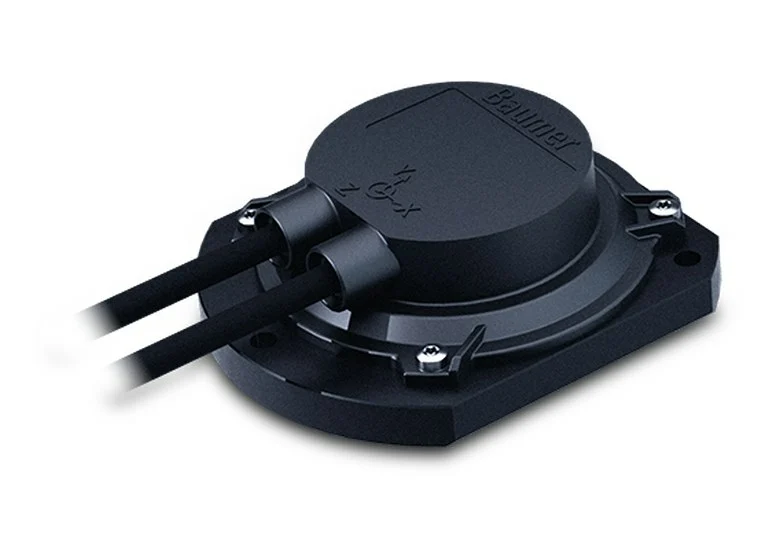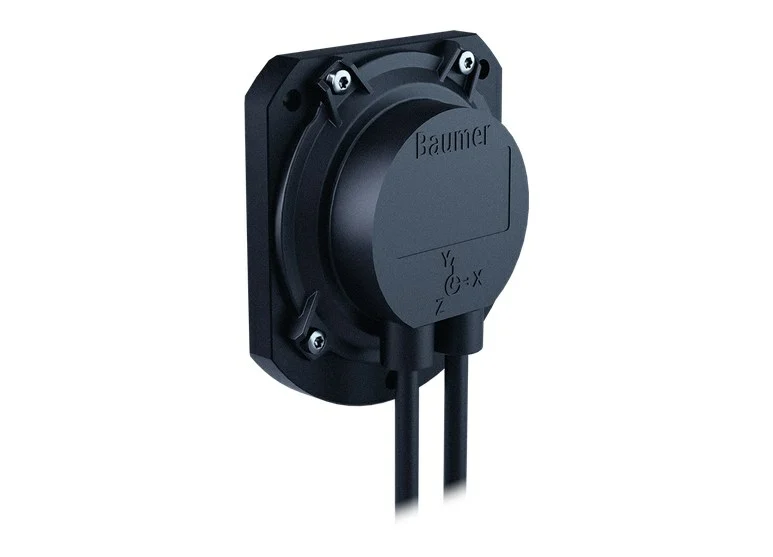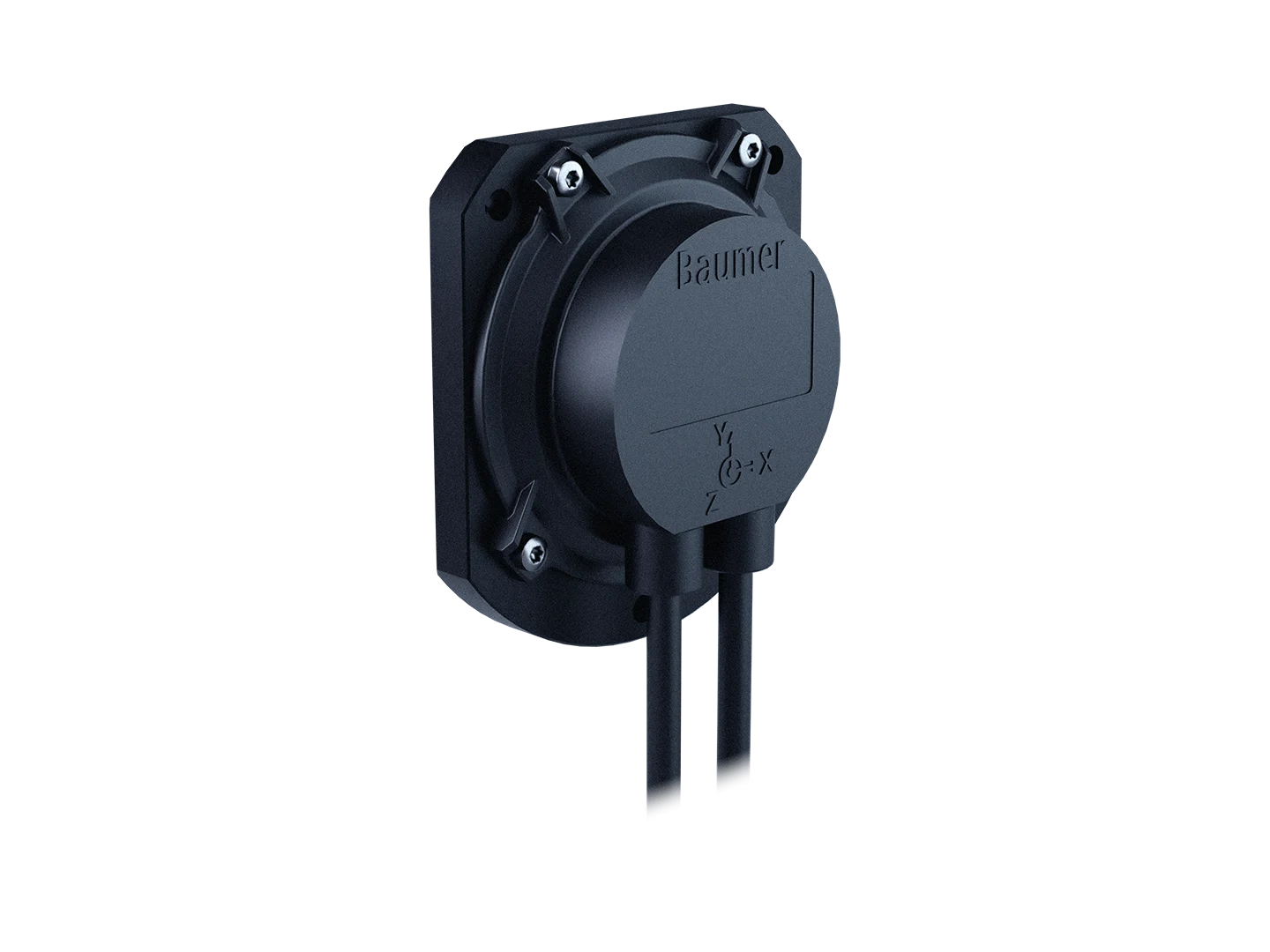
Highlights
- 1-dimensional, measuring range 0…360°
- Designed for mobile machines
- E1 compliant design
- Load dump protection
- Protection up to IP 69K
- Corrosion protection CX (C5-M)
- Connection cable / cable with M12 connector
- Interface CANopen®
- Redundant versions (2-channel architecture)
- Applicable up to PLd (ISO 13849)
Technical Specifications
| Technical data – electrical ratings | |
|---|---|
| Voltage supply | 8…36 VDC |
| Reverse polarity protection | Yes |
| Short-circuit proof | Yes |
| Consumption typ. | 15 mA (24 VDC, w/o load); 30 mA (24 VDC, w/o load, redundant) |
| Initializing time typ. | ≤ 1 s after power on |
| Interface | CANopen® |
| Measuring range | 0…360° |
| Resolution | 1 … 0.001 ° |
| Accuracy (+25 °C) | Typ. ±0.1° |
| Absolute accuracy max. | ±0.26° (+25 °C); ±0.47° (0…+50 °C); (measuring range 0…360°) |
| Repeatability typ. | 0.025 ° (+25 °C) |
| Sensing method | MEMS technology |
| Sensing rate | 1000 Hz (1 ms) |
| Limit frequency | 0.1…30 Hz, 2. order / low-pass filter |
| Output stages | CAN-Bus compatible ISO 11898 |
| Load dump protection | ISO 16750-2 for 12 V / 24 V systems; Pulse 5b (test criteria B) |
| Interference immunity | EN 61000-6-2; ISO 7637-2*; ISO 7637-3*; ISO 11452-2*; ISO 11452-4*; ISO 11452-5*; EN 61000-4-2 (CD ±8 kV, AD ±15 kV); * Severity level according to ECE R10 (Rev. 6 + Amd 02:2021-12) |
| Emitted interference | EN 61000-6-3; EN 61000-6-4; ISO 7637-2*; CISPR 25:2008 (30…1000 MHz); * Severity level according to ECE R10 (Rev. 6 + Amd 02:2021-12) |
| MTTFd (ISO 13849) | High (>100 years) |
| Programmable parameters | Preset / zero position; Resolution; Limit frequency (low-pass filter); Rotating direction |
| Diagnostic function | Supply voltage monitoring; Temperature control |
| Approval | UL approval / E217823 |
| Technical data – mechanical design | |
| Dimensions W x H x L | 72 x 24 x 64 mm |
| Protection EN 60529 | IP 66; IP 67; IP 68 (without connector); IP 69K (without connector) |
| Material | Housing: polyamide (glass fiber reinforced); Base plate: metal |
| Corrosion protection | IEC 60068-2-52 Salt mist; for ambient conditions CX (C5-M) according to ISO 12944-2 |
| Operating temperature | -40…+85 °C |
| Resistance | EN 60068-2-6; Vibration 30 g, 60-2000 Hz; EN 60068-2-27; Shock 200 g, 3 ms; EN 60068-2-64; Random vibration 10 gRMS, 20-1000 Hz |
| Temperature changes | EN 60068-2-14, -40…+85 °C |
| Weight approx. | 150 g |
| Connection | Flylead connector 2xM12, 5-pin, (Bus-in/Bus-out), length 300 mm |
Order code
| GIM600R-N136.PC8.A | Article no. 11729166 |
CANopen® features
- Profiles: CANopen® CiA DS 301 V4.2, inclinometer profile DS 410 V2.0, LSS service profile DS 305 V3.0
- Default settings: resolution 0.1°, limit frequency 5 Hz, baud rate 250 kbit/s, Node-ID 1 (Node-ID 2 on the redundant version), time-driven transmission 100 ms
- PDO 1 content: temperature and the inclination angle (slope long); the angle is transmitted in steps of 0.1° and increases with clockwise rotation
- Listed as options in the data sheet: 3-axis acceleration can be PDO-mapped; GIM140R-compatible SDO baud rate table. Acceleration values are for information purposes only.
Connection and pin assignment
Connection: flylead connector 2 x M12, 5-pin (Bus-in / Bus-out); M12 flange connector (male/female), A-encoded.
| Pin 1 | CAN_GND (ground connection relating to CAN) |
| Pin 2 | +Vs (voltage supply) |
| Pin 3 | GND (ground connection relating to +Vs) |
| Pin 4 | CAN_H (CAN bus signal, dominant high) |
| Pin 5 | CAN_L (CAN bus signal, dominant low) |
- The GND and CAN_GND terminals are internally connected and identical in their functions.
- Maximum load on the Vs and GND terminals is 1.5 A each; the daisy chain current is max. 1.5 A.
Installation and commissioning notes
- The rotational axis must be horizontal, perpendicular to earth gravity; maximum misalignment ±3°.
- The default position is 0° and can be configured with the zero setting function.
- Reference the zero position of the sensor after installation and check the zero-point stability regularly while installed.
- Electromagnetic influences can reduce measuring accuracy (see the manufacturer’s application note).
- Self-heating must be considered for precise thermal design; approximately 5 K applies when mounted on a painted metal base. When operating close to the maximum characteristic values, the actual temperature at the sensor housing must be measured.
Browse other Baumer products or the Sensors category. Related models: Baumer GIM600R-N290, Baumer GIM140R, Baumer GIM600DR-N136.
DOWNLOADS
 Baumer GIM600R-N136 Inclination Sensor – Data sheet (PDF)
Frequently asked questions
Which CANopen® profiles does the GIM600R-N136 support?
According to the data sheet: CANopen® CiA DS 301 V4.2, inclinometer profile DS 410 V2.0 and LSS service profile DS 305 V3.0.
What are the default baud rate, Node-ID and limit frequency?
The default resolution is 0.1°, the limit frequency 5 Hz, the baud rate 250 kbit/s and the Node-ID 1; the redundant version uses Node-ID 2. Transmission is time-driven at 100 ms by default.
Can it be used in safety functions?
The sensor is described as applicable up to PLd (ISO 13849). According to the data sheet, use in safety functions is based solely on the quick start guide, the Application Note and the MTTFd reliability prediction; the MTTFd prediction is requested separately.
What should be considered after installation?
The zero position must be referenced after installation and the zero-point stability checked regularly while installed. Electromagnetic influences can reduce measuring accuracy.
Which options are listed in the data sheet?
3-axis acceleration PDO mapping and a GIM140R-compatible SDO baud rate table. Acceleration values are for information purposes only.